 Comparison
Senior Portrait vs School Photo Quality: Which Is Worth It?
Quick Summary
A senior portrait is a planned, personal session built around the student, while a school photo is a standardized picture taken on picture day for yearbook and ID records. For a lasting graduation image, the senior portrait gives far more control over light, setting, wardrobe and final use. The difference is intent: one serves hundreds of students quickly, the other is designed around one person.
- A school photo uses fixed, flat lighting built for speed across many students.
- A senior portrait lets the photographer shape light and choose the location for one student.
- Families wanting wall prints or albums generally need a session built for that purpose.
- Ask what file resolution is delivered and what print size it supports without upsampling.
- Proofs at Swartz Portraits are revealed in person seven to ten days after the session.
Table of Contents
- Senior Portrait vs School Photo: The Direct Answer
- How Lighting and Lens Choices Differ
- Editing, Retouching, and Image Delivery Compared
- Senior Portrait Poses That Show Personality
- Choosing Senior Portrait Locations in the Houston Area
- Senior Portrait Outfit Ideas Beyond the Yearbook Standard
- Cost, Value, and Print Options: A Side-by-Side View
- Planning Your Senior Portrait Session
- Schedule Your Free In-Home Consultation
- Frequently Asked Questions
Senior Portrait vs School Photo: The Direct Answer
A senior portrait is a planned, personal session built around the student, while a school photo is a standardized picture taken on picture day for the yearbook and ID records. For most families choosing a lasting image of their graduating student, the senior portrait offers far more control over light, setting, wardrobe and final use. Swartz Portraits is an application-only fine art senior portrait studio, and this guide explains how the two approaches differ so you can decide which fits your student.
The core difference is intent. A school photo is designed to be consistent across hundreds of students, so the setting, lighting and pose are fixed and quick. A senior portrait is designed around one person. The photographer and student can talk through personality, interests and style before the camera comes out, then shape the session around the answers.
Common questions point to the same contrast. Families often ask whether a school photo can simply stand in for a senior portrait. In most cases it cannot, because the school photo was never meant to be the centerpiece of a graduation keepsake. Families who want wall portraits, albums or fine art prints generally need a session built for that purpose from the start.
Quality is where the two diverge most clearly. Image quality depends on lighting control, lens choice, editing and how the final files are delivered. The sections below compare each of those factors directly.
How Lighting and Lens Choices Differ
Image quality is not a mood. It is the sum of a few measurable decisions: how light is shaped, which lens is used, how the file is captured, and how it is finished. School portraits and senior portraits diverge on every one of those, and the difference shows up most at print size.
Start with light. A school portrait setup is built for throughput. The light is placed to be consistent across hundreds of students in a short window, so it tends to be flat and frontal. That is not a flaw for a yearbook page, where the image runs small and the goal is a clean, recognizable face. It becomes a limitation the moment the portrait is enlarged, because flat light leaves little shadow to describe cheekbones, jawline, or the shape of the face.
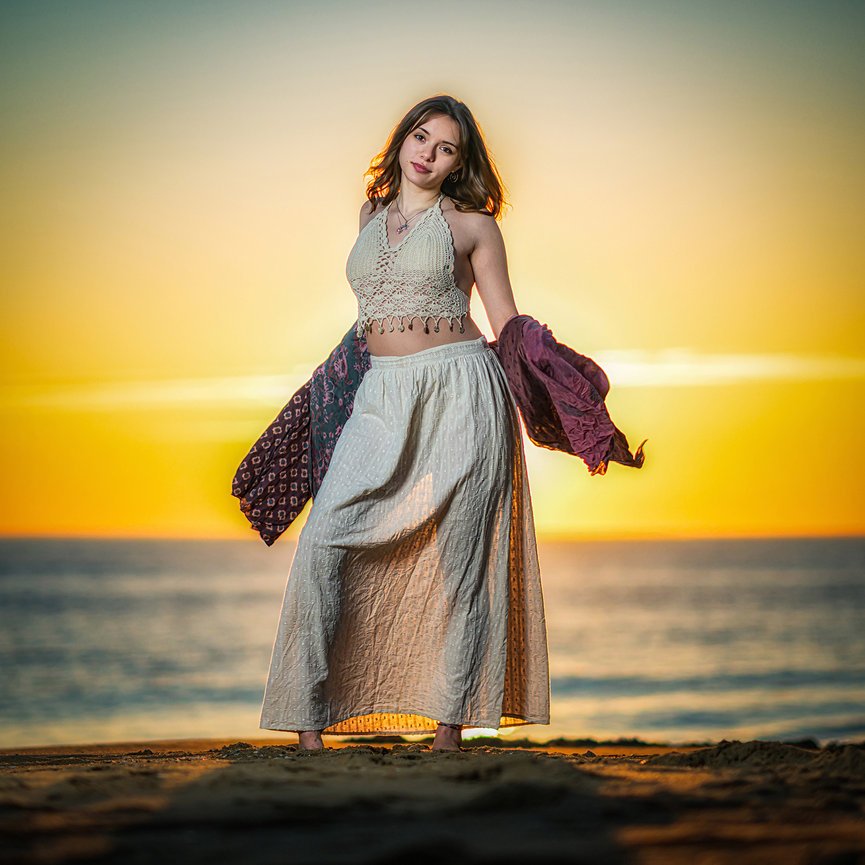
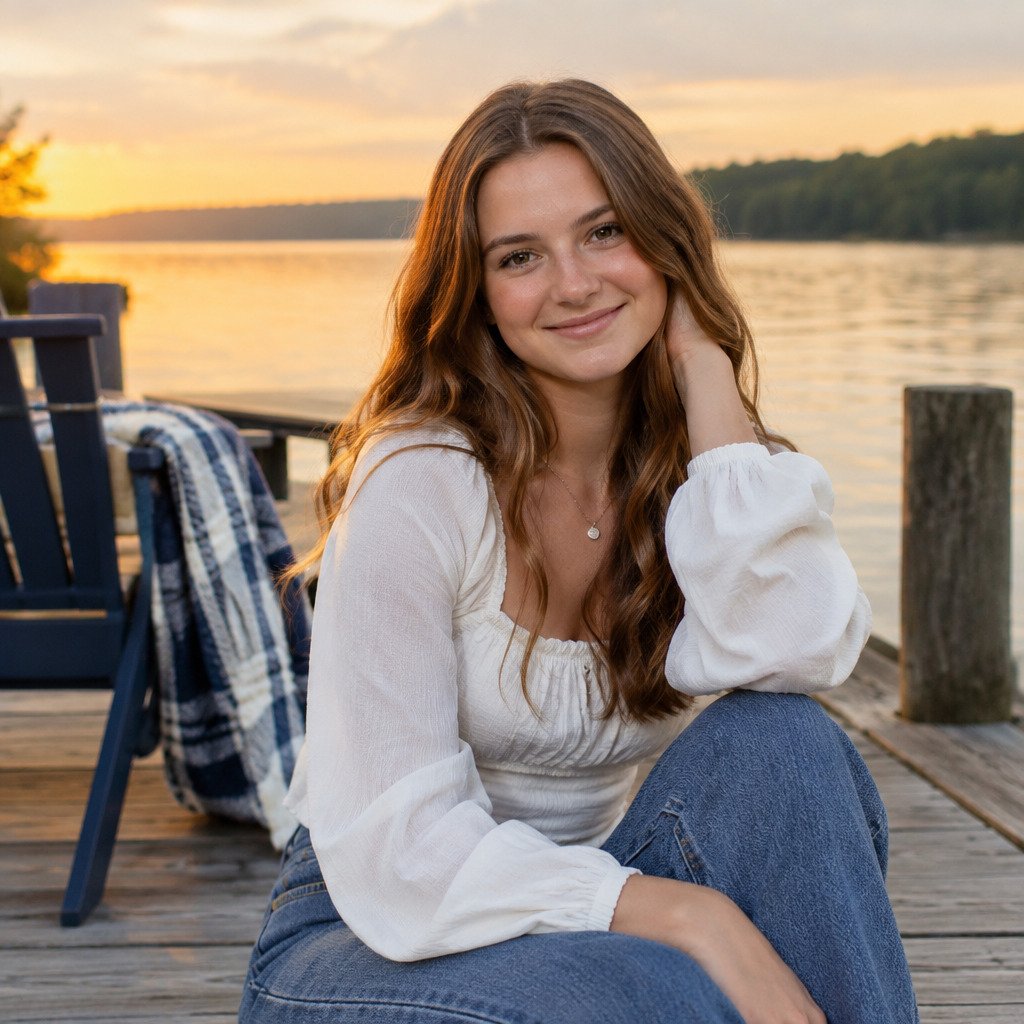
A senior session can shape light for one face, moving a key light closer or farther, or stepping the student into open shade. Outdoors, late afternoon light near Lake Conroe or along The Woodlands Waterway adds warmth and direction that a fixed indoor setup cannot reproduce.
Lens choice changes the geometry of a face. Longer focal lengths compress the background and keep the subject separated from it, which is why portrait photographers favor them for head-and-shoulder frames. Shorter focal lengths take in more of the setting and are better for environmental portraits where the location tells part of the story. A school setup typically locks in one lens and one distance for consistency.
Resolution and capture matter more than most families realize. A file that will be printed at 16 by 20 inches or larger needs enough pixels and a clean capture to hold detail in the eyes, hair, and fabric. Ask any photographer what the finished file resolution is and what size print it supports without upsampling. The answer tells you whether a wall portrait is realistic or whether the image is really built for a screen.
Color and finishing complete the chain. Consistent color across a set, careful white balance, and controlled contrast are what make a portrait look right on a wall years later.
Use this checklist when you compare any two portraits side by side. Look at the eyes: are they sharp, with a catchlight that gives life? Look at the shadow under the chin: does it describe the jaw or flatten it? Look at the background: is it controlled, or is it competing with the face? Look at the skin: is it clean but still textured, or plastic? Look at the edges: is the hair clean against the background, or haloed? Then ask how large the image can print before it falls apart. Those five questions separate a portrait built for a yearbook slot from one built for a wall.
Ask to see a full gallery from one session, not a single hero frame, so you can judge consistency across outfits, locations, and light.
Editing, Retouching, and Image Delivery Compared
Editing is where many families are surprised by the gap between the two approaches. School photos are usually color-corrected and cropped for speed, then delivered as digital files in standard sizes. The aim is accuracy and consistency across a large group, not refinement of an individual image.
Senior portraits typically involve a more deliberate editing stage. Retouching decisions should be discussed openly, because the level of editing shapes how the portrait will look on a wall in ten years.
Delivery also differs. School photo packages often arrive as a set of standard prints or downloads tied to the school calendar. A senior session usually produces a curated selection, with files and prints chosen to suit the family's plans. At Swartz Portraits, proofs are revealed in person seven to ten days after the session.
Ask any photographer to explain the full path from the camera to the final file. You should hear how many images are delivered, what file formats are included, and how printing is handled. Clear answers to these questions matter more than a sample image chosen to look impressive.
Senior Portrait Poses That Show Personality
A senior portrait works best when the poses look like the student, not like a template. School photos rely on a single standard pose because the goal is uniformity. A senior session can explore a range of poses that reflect how the student stands, moves and expresses themselves.
Start with the student's natural habits. Some students are comfortable leaning against a wall or sitting on a bench, while others photograph better while walking. A relaxed moment often produces the most authentic image, so the session can include both directed poses and quieter candid frames. The mix gives families both a classic portrait and a picture that captures the student's character.
Props and interests can add depth without becoming distracting. Keep the number of props small so the student remains the focus.
Posing for a shy student requires patience. Many families find that the first few frames feel stiff, and the more natural images appear once the student settles in.
Choosing Senior Portrait Locations in the Houston Area
Location shapes the mood of a senior portrait as much as lighting does. School photos are taken in one fixed setting, while a senior session can move between places that suit the student's style. Choosing well makes the difference between a generic backdrop and a portrait with a clear sense of place.
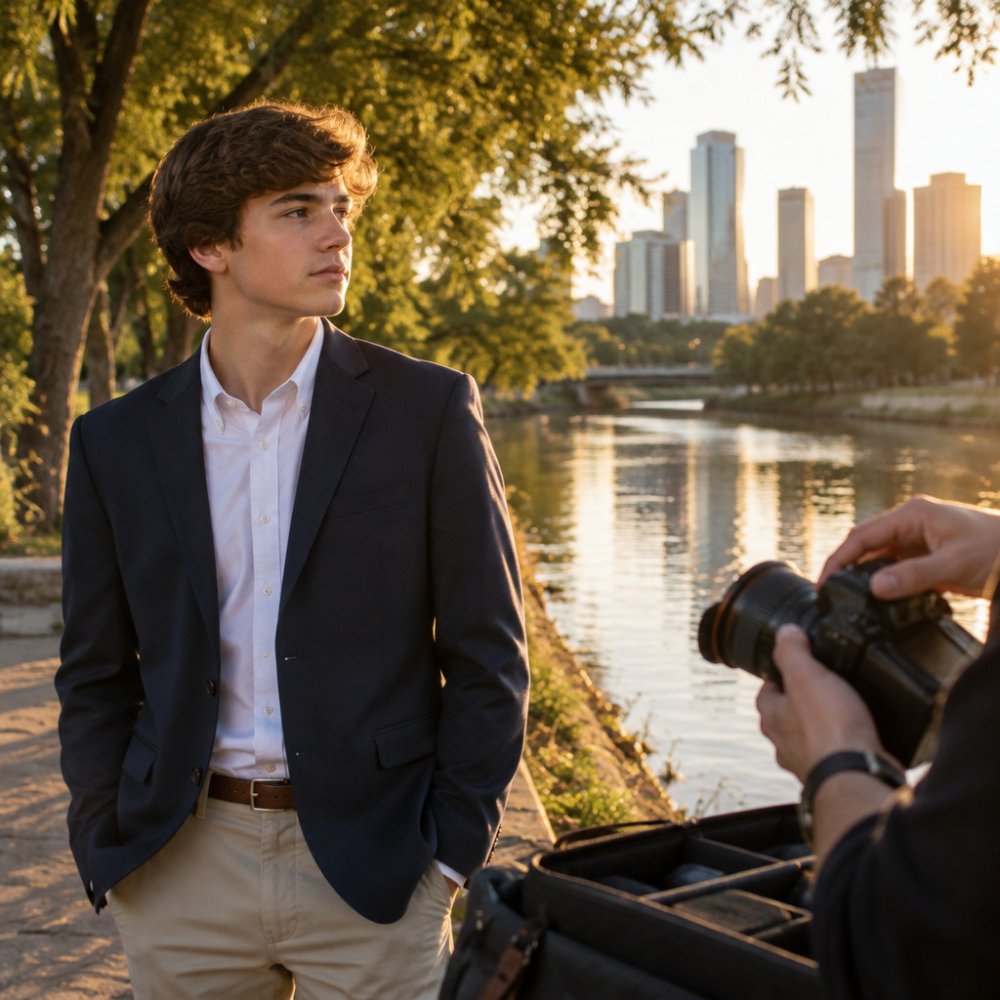
Several public locations in and around the Houston area offer distinct looks, including Lake Conroe, The Woodlands Waterway, Old Town Spring, Mercer Botanic Gardens, and Towne Lake. Each location suits a different personality, from classic and polished to relaxed and natural.
Match the location to the student rather than to a trend. A student who loves reading may suit a quiet garden, while one who is active may be better photographed outdoors in motion. Think also about the final use. A location with strong lines and clean space can work well for a large wall print, while a softer, layered setting may suit an album.
Practical planning helps. Check the time of day, since early morning and late afternoon usually give the most flattering light. Consider wardrobe colors against the setting, and allow time to move between spots. Swartz Portraits sessions include multiple locations.
Senior Portrait Outfit Ideas Beyond the Yearbook Standard
Outfits are one of the clearest differences between a yearbook photo and a senior portrait. School photos usually ask students to dress in a standard way for a consistent look. A senior session welcomes a wider range of wardrobe, because the goal is to reflect the student rather than blend them into a group.
Plan a few outfits that show different sides of the student. A classic option, such as a tailored jacket or a simple dress in a solid color, suits formal wall portraits. A more casual look, like a denim jacket or a favorite sweater, can work well for outdoor images. Some students also enjoy a statement piece, such as a bold color or a meaningful accessory.
Keep colors in mind. Solid tones often photograph more cleanly than busy patterns, and colors that contrast with the setting help the student stand out. Avoid large logos and text, which can pull attention from the face. Bring a small range of options rather than a large bag of clothes, so the session stays focused.
Swartz Portraits sessions include unlimited outfit changes.
Cost, Value, and Print Options: A Side-by-Side View
Cost is a poor comparison on its own. Two portraits can carry the same price and deliver very different things. The useful question is what each option includes and what it is built to do.
A school portrait is a standardized product, built around speed and consistency rather than time with one student.
A senior session is priced around time, planning, and finishing. The session fee is $300 for up to five hours. Prints and albums are chosen after the family sees the images.
Break any quote into its components before you compare. Ask what the session fee covers and what it does not. Ask how many finished images are included, whether digital files are part of the package or sold separately, and what resolution those files carry. Ask whether prints are made in-house or through a lab, and what paper or mounting options exist. Ask how long the finished pieces take and whether there is a minimum order. A quote that answers all six is comparable. One that answers two is not.
At Swartz Portraits, the session fee is $300 for up to five hours with unlimited outfit changes and multiple locations, plus a complimentary 60-minute in-home consultation. Finished pieces include museum-quality heirloom prints, albums, and wall art handcrafted in Italy by GraphiStudio. Pricing for prints and collections depends on the products chosen, so request a current quote from the studio before you decide.
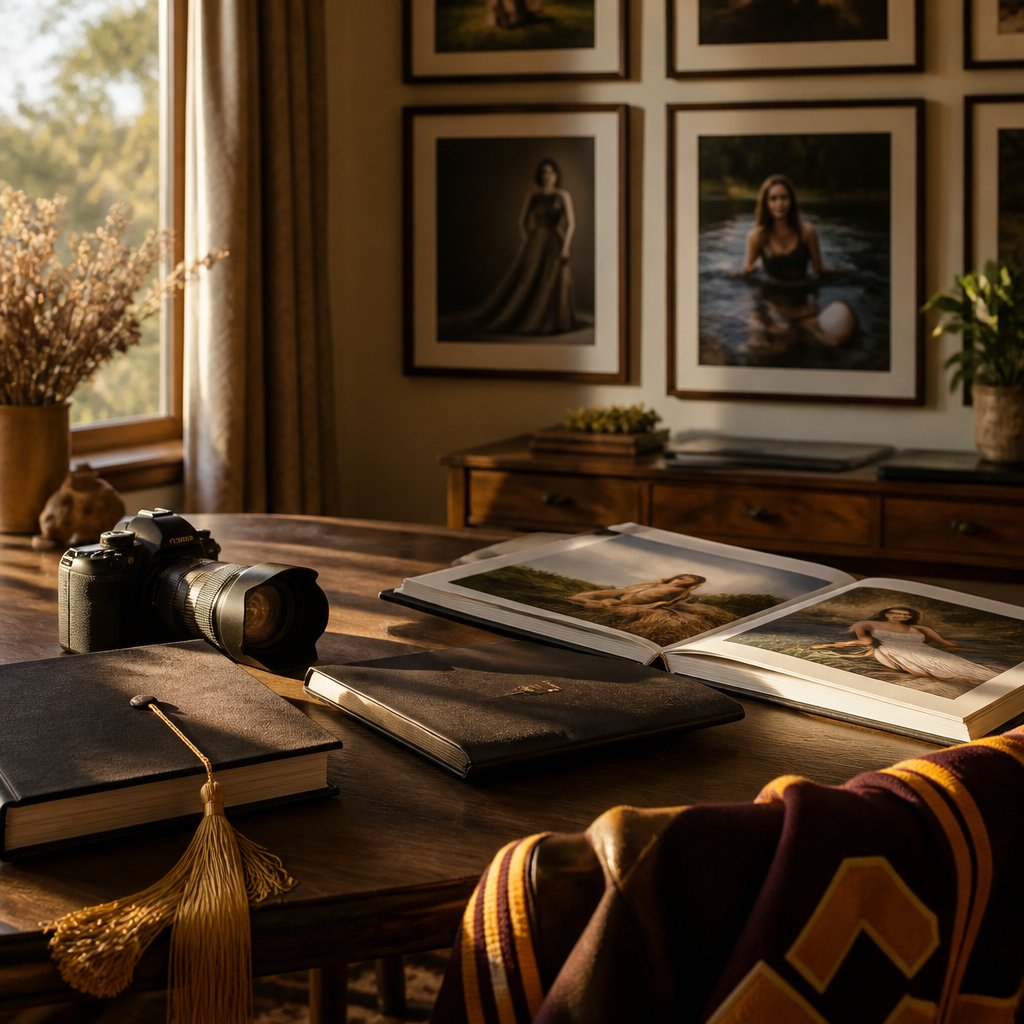
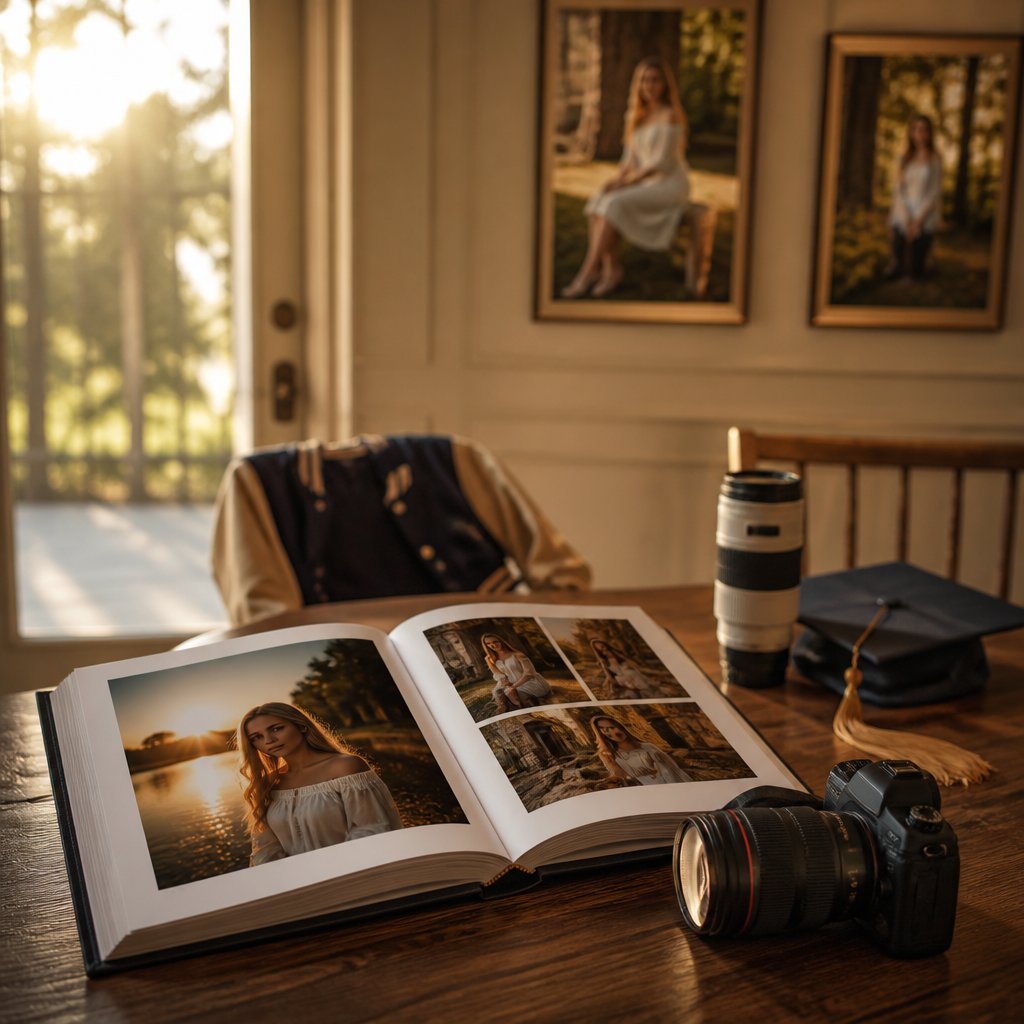
Value depends on intended use, and intended use should drive the decision. If the portrait is for a yearbook slot and a wallet-size print for relatives, a school package covers it. If it is for a graduation announcement, a large wall piece, an album, or a gift that lasts, the session and the finished products are the point. Families often order a combination: one formal piece for the wall, a smaller set for announcements, and an album for the years after.
Ask for the full cost of the finished pieces you actually want, not the entry price, before you compare two options.
Planning Your Senior Portrait Session
A well-planned session produces better results than a rushed one. Start by setting the date early, especially for the spring months when graduation timelines fill quickly. Allow time for the in-home consultation, where the photographer and family can discuss goals, locations, wardrobe and the final products.
Before the session, choose two or three outfits and check them under natural light. Pack a small kit with a comb, lint roller, water and any props the student wants to use. Confirm the meeting location and plan for travel between spots, since a session with several locations needs a realistic schedule.
On the day, expect the first portion to feel slower as the student settles in. Trust the process. An unhurried session gives the photographer time to find the strongest images, and many of the most natural frames often appear later in the day. Proofs are then reviewed in person seven to ten days after the session, which gives families time to decide what to keep and order.
Planning also includes deciding the end result. Think about where the portraits will hang, whether an album is wanted, and who should be included in the review. Clear goals make it easier to choose the right products and to feel confident in the final selection.
Schedule Your Free In-Home Consultation
Choosing between a senior portrait and a school photo comes down to what you want the image to do. A school photo serves a standard purpose. A senior portrait is a personal, unhurried session that reflects your student and produces lasting heirloom pieces. Swartz Portraits limits the studio to 100 seniors per year, with no more than 8 from any single high school, so availability is limited.
Schedule your free in-home consultation.
Frequently Asked Questions
Is there a difference between senior photos and graduation photos?
Yes. Graduation photos are usually a single, standardized image taken in a cap and gown, often as part of a school ordering process. Senior portraits are a dedicated session built around the student, with multiple outfits, locations, and poses. The result is a broader collection that reflects personality rather than a uniform setup. Families who want images for wall display, albums, and keepsakes usually find the senior session covers more of those needs than a graduation portrait alone.
Are senior portraits worth it?
For many families, yes, especially when the goal is a collection that looks like the student rather than a standardized school image. Swartz Portraits charges a $300 session fee, with final pricing for prints, albums, and wall art depending on the selections made. Families can review those details during the complimentary 60-minute in-home consultation.
What should families look for in a senior portrait photographer?
Look for a photographer whose portfolio shows natural expression and consistent lighting, and ask how the session is structured from start to finish. Confirm session length, what is included, how proofs are reviewed, and how finished pieces are produced. Ask whether the studio limits the number of seniors it photographs. A consultation before booking helps confirm the fit.