
 blog
blog
Studio vs. Chain: What Sets Fine Art Senior Portraits Apart
Table of Contents
- The Core Difference: Customization vs. Cookie-Cutter
- What a Senior Portrait Studio Offers That Chains Don't
- Understanding Your Senior Portrait Session
- Planning Your Senior Portrait Outfits
- Selecting Your Senior Portrait Locations
- What to Expect in Your Senior Portrait Packages
- How to Choose: A Decision Framework
- Frequently Asked Questions
Last Updated: October 5, 2026
The Core Difference: Customization vs. Cookie-Cutter
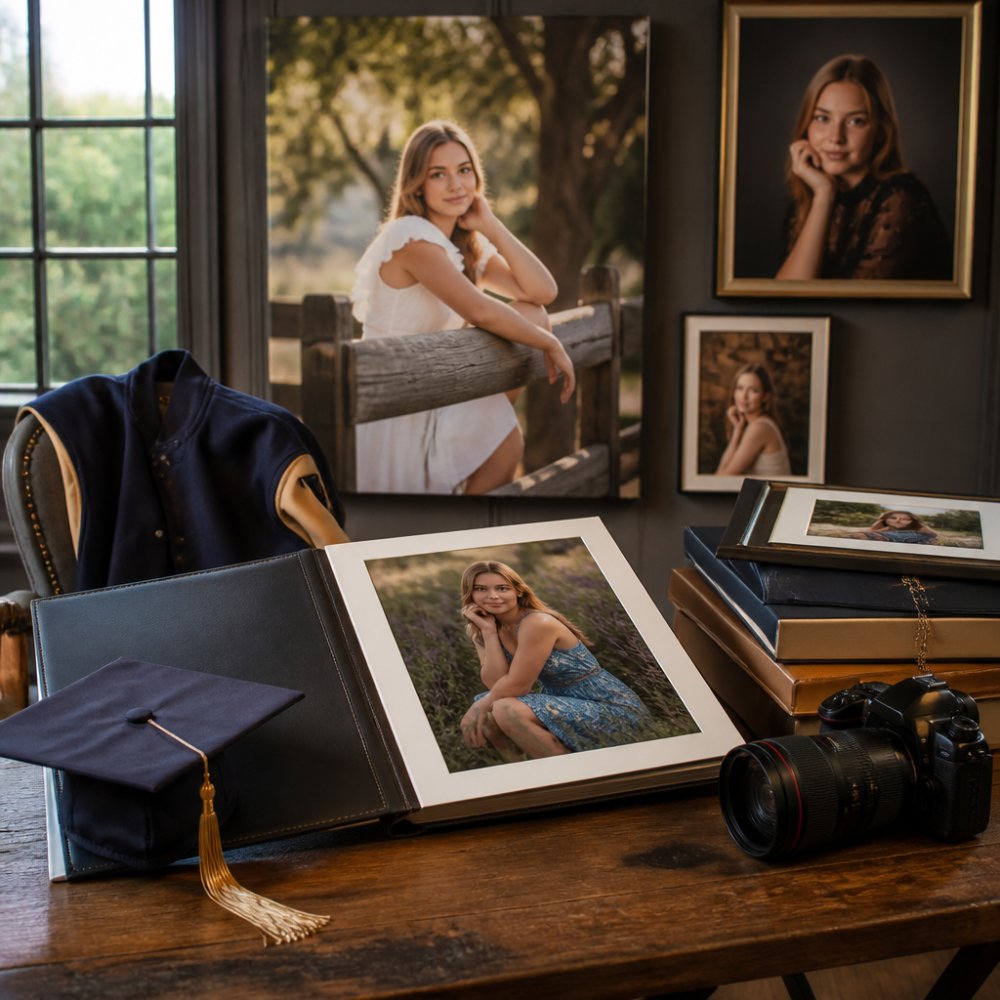
A fine art senior portrait studio treats your session as a bespoke experience tailored to who your child actually is. Chain studios follow a standardized formula: same poses, same backgrounds, same lighting setup for every senior. The difference between the two approaches shapes everything that follows, from how your session unfolds to what you take home.
This distinction matters because high school seniors deserve portraits that reflect their personality, not a template. At Swartz Portraits, we've spent 40 years photographing graduating students.
When you choose a senior portrait studio, you're deciding between two fundamentally different experiences. One prioritizes volume and consistency. The other prioritizes the individual. Understanding what each offers helps you make a decision that aligns with what your family values. Investing in a bespoke session reflects a deeper appreciation for the value of original photography, which accounts for the distinct difference in the time and artistry required to capture a student's true character.
What a Senior Portrait Studio Offers That Chains Don't
A dedicated senior portrait studio operates differently from the ground up. These studios limit their client load, invest in specialized equipment, and build their entire process around the idea that each session is unique.
Chains operate on efficiency. They schedule back-to-back sessions, use preset lighting rigs, and rely on a catalog of standard poses and backgrounds. The advantage is speed and predictability. The tradeoff is personalization.
A studio approach means your session is unhurried. There's no timer running. Your high school senior can try multiple outfits, explore different locations, and work through any camera shyness without feeling rushed. The photographer guides posing based on your child's frame, comfort level, and the look you're after, not a predetermined sequence.
Studios also typically include a consultation before your session. This isn't a quick phone call. At Swartz Portraits, we offer a complimentary 60-minute in-home consultation where we discuss your vision, talk through outfit choices, scout location ideas, and build a relationship before the camera comes out. Chains rarely offer this level of pre-session planning.
The finished products differ too. Studios often deliver museum-quality heirlooms: professional wall portraits, albums, and prints handcrafted in Italy. Chains typically provide digital files and encourage printing through other providers.
One-on-One Posing Guidance
Posing guidance separates a memorable session from a forgettable one. A Master Photographer doesn't just position your senior and click. They coach, adjust, and adapt based on what they see in the moment.
This matters especially for teenagers who feel uncomfortable in front of the camera. A skilled photographer knows how to ease that tension. They explain why a slight shoulder turn works better than a straight-on stance. They show how a genuine smile comes from thinking about something meaningful, not forcing it. They adjust lighting or background based on what flatters your child's face and build.
Chain studios rely on pose guides and preset directions. The photographer might say, "Stand here, look there, smile." Your senior follows instructions but doesn't get the coaching that transforms an awkward moment into a natural, confident image.
One-on-one guidance also means the photographer is watching for the in-between moments. The laugh that happens after the posed shot. The genuine expression when your child relaxes. A studio photographer captures those moments because they're not locked into a rigid schedule.
Lighting, Equipment, and Studio Setup
The quality of your portraits depends heavily on lighting. Chain studios use standardized lighting setups designed to work quickly and consistently across dozens of sessions per day. These setups are functional but often flat or unflattering.
A dedicated studio invests in professional-grade lighting equipment and knows how to use it for different skin tones, face shapes, and settings. Outdoor sessions benefit from reflectors, diffusers, and fill flash that control harsh sunlight. Indoor work uses multiple light sources positioned to sculpt and define features.
Equipment also matters. Studios typically use professional-grade cameras, lenses, and backup gear. If something fails mid-session, there's a backup.
The studio environment itself contributes. A dedicated studio has a comfortable changing area, climate control, and space to move. It's designed so your senior feels at ease. Chain studios often operate in retail spaces with minimal setup, which can feel impersonal.
Ownership and Access to Your Digital Images
This is a detail many families overlook until after the session: who owns the digital files, and what can you do with them?
At a studio like Swartz Portraits, you receive high-resolution files of every portrait. You own these files. You can print them yourself, share them on social media, order additional prints, or use them however you want. There's no licensing restriction.
Chain studios often retain ownership of the digital files or restrict what you can do with them. You might get low-resolution "web proofs" for social sharing but need to order prints through the studio's lab at their markup. This creates an ongoing revenue stream for the chain but limits your flexibility.
Understanding the digital file policy before you book matters. Some families want the files for social media and sharing. Others prioritize professional prints and albums. Either way, knowing the ownership and usage rights prevents surprises later.
Understanding Your Senior Portrait Session
A senior portrait session is more than showing up and smiling at the camera. The best sessions involve planning, collaboration, and time.
A studio session typically runs several hours. At Swartz Portraits, sessions run up to five hours with unlimited outfit changes. This length allows you to explore multiple looks, try different locations, and let your senior settle into comfort in front of the camera.
The session structure usually follows a pattern: start with one outfit and location to build confidence, transition through additional outfits as your child relaxes, and finish with a look or location that feels most authentic. The photographer adjusts the pace based on your senior's energy and comfort.
Chains schedule 30-minute to one-hour sessions. In that timeframe, you get one outfit, one or two backgrounds, and a handful of poses. The session feels efficient but compressed.
The difference in time translates to more options, more authentic moments, and a higher likelihood of portraits you genuinely love. Rushed sessions often feel like it.
Planning Your Senior Portrait Outfits
Your outfit choices shape how your portraits look and feel. The best sessions include multiple outfits that reflect your senior's personality and style.
Before your session, think about what your child wears when they feel most confident. That might be jeans and a favorite sweater. It might be a dress or suit. It might be athletic wear if your senior plays sports. The goal is authenticity, not costume.
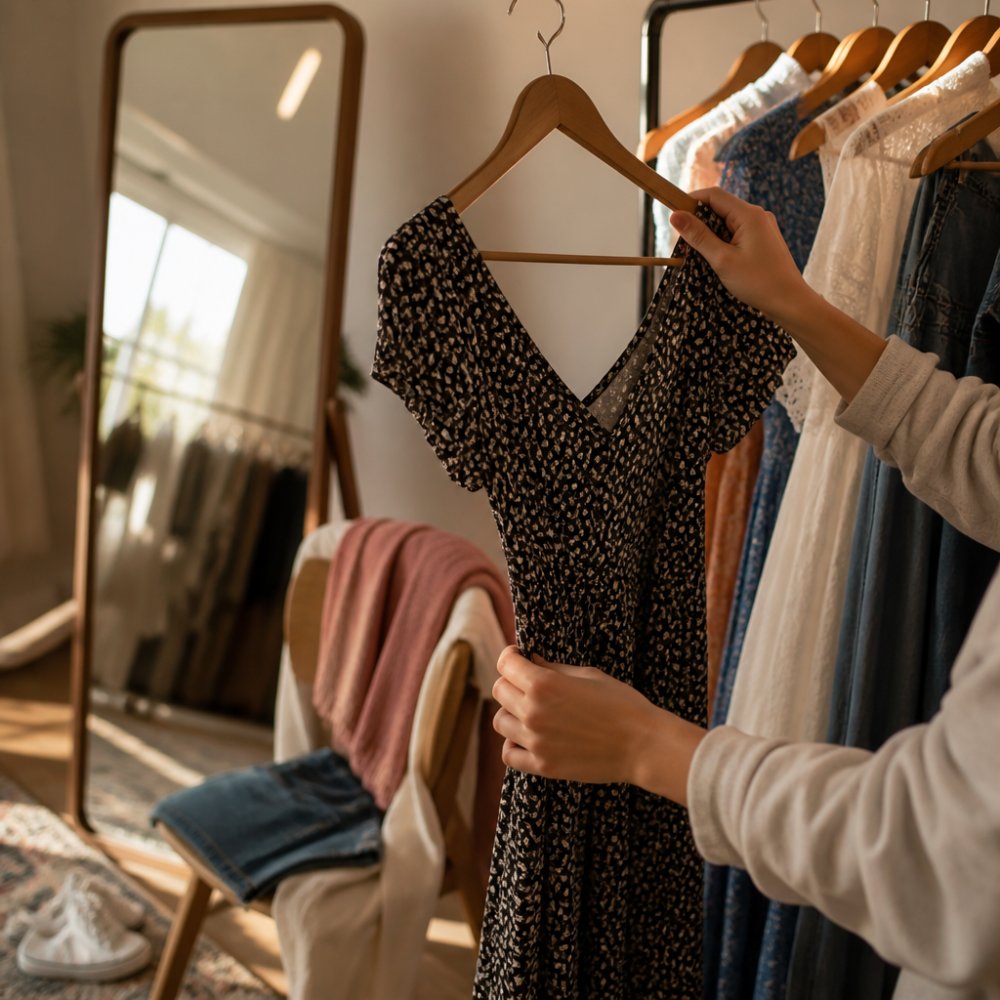
Each outfit should feel like a different version of your child. One might be casual and relaxed. Another might be more polished. A third might showcase a hobby or interest.
Color matters. Jewel tones, earth tones, and solid colors photograph well. Busy patterns and logos can distract from your senior's face. Avoid bright white or neon unless that's genuinely part of their style.
Fit matters too. Clothes should feel comfortable and move naturally. Overly tight or baggy clothing looks awkward in photos. Your senior should be able to move, sit, and relax without adjusting constantly.
A studio consultation gives you time to discuss outfit ideas with the photographer. They can offer feedback on what works and why. Chains rarely provide this guidance, leaving outfit decisions entirely to you.
Selecting Your Senior Portrait Locations
Where your portraits are taken influences the mood and quality of the images. Studios offer flexibility here. You might shoot in a studio setting, outdoors, or a combination of both.
Outdoor locations provide natural light and interesting backgrounds. Public locations like parks, gardens, and waterfronts work well. The Woodlands Waterway, Lake Conroe, Mercer Botanic Gardens, and Old Town Spring offer variety without requiring special permits.
Studio locations provide controlled lighting and a professional backdrop. They work especially well if weather is a concern or if your senior prefers a more intimate setting.
The best approach combines both. A session might start indoors to build confidence, then move outdoors for variety. Or it might use an outdoor location with a studio-style setup for lighting control.
Chains typically offer a standard set of backgrounds and locations. You pick from their catalog. Studios work with you to choose locations that match your vision and your senior's interests.
What to Expect in Your Senior Portrait Packages
Understanding what is included prevents confusion later. It also prevents the most common budgeting mistake families make: comparing headline session prices instead of comparing what each path actually delivers from start to finish.
A studio package typically includes the session itself, a consultation, and finished products. At Swartz Portraits, the session fee covers up to five hours of session time, unlimited outfit changes, multiple locations, and a private in-person reveal where proofs are shown seven to ten days after your session. Finished products are chosen at that reveal, so you decide what you want after you have seen the portraits, not before.
The reveal is significant. You sit down with the Master Photographer to see your portraits for the first time together. You can ask questions, get recommendations for prints or albums, and understand the story your images tell. This moment matters because it transforms the session from a transaction into a relationship.
Chains work differently. The session fee is usually lower, but it typically covers only the sitting. Prints, digital files, and enlargements are priced separately afterward. That structure is why a chain session can look less expensive at the start and cost more by the time you have the images you actually want on your wall.
Comparing Total Cost, Not Headline Price
The honest way to compare a studio and a chain is to add up everything you will want, not just the sitting fee. Ask each provider four questions before you decide.
First, what does the session fee include, and what costs extra? Second, are digital files included, and at what resolution? Third, what does a wall print or album cost through their lab? Fourth, is there a minimum order or package requirement?
A common pattern is that chain pricing unbundles every deliverable. The sitting is one line, the digital files are another, prints are another, and enlargements are another. By the time a family adds a framed wall portrait and a set of digital files, the total can approach or exceed what a studio charges for a session that already includes some of those pieces.
A studio like Swartz Portraits bundles the experience and the finished products into one conversation at the reveal. You see the portraits, you choose the heirlooms you want. The total is what you decide it is, based on what you will actually display and keep.
Turnaround, Rescheduling, and Service Policies
Delivery timelines and service terms differ sharply between the two paths, and they matter when graduation, announcements, and gift deadlines are on the calendar.
At Swartz Portraits, proofs are revealed in person seven to ten days after the session. That gap is intentional. It gives the Master Photographer time to finish the portraits properly rather than batch-process them. Finished products are ordered after the reveal, so the timeline from session to wall art depends on what you choose.
Other providers often deliver proofs faster because the editing is standardized. If speed is your only priority, that is a real advantage. If you want portraits that look like your child, the extra days are part of what you are paying for.
Ask about rescheduling before you commit. Weather, illness, and schedule conflicts happen, especially in the spring of senior year. A studio that limits its client load, like Swartz Portraits at 100 seniors per year and no more than 8 from any single high school, has room to move a session when life intervenes. Other providers running back-to-back appointments have far less flexibility, and a missed slot can push you weeks out.
Ask about retakes too. A studio session that runs up to five hours with unlimited outfit changes is designed to get the portraits right the first time, so retakes are rarely needed. A compressed session leaves less margin, and a retake may mean another fee.
Finally, ask what happens after the session. Who do you call if a print arrives damaged? Who helps you reorder an album for a grandparent? A studio relationship continues after the reveal. Other providers' transactions usually end at pickup.
| Element | Studio Approach | Chain Approach |
|---|---|---|
| Session Length | Up to 5 hours | 30 minutes to 1 hour |
| Outfit Changes | Unlimited | 1-2 typically |
| Consultation | 60-minute in-home consultation included | Minimal or none |
| Locations | Multiple, customized | Preset catalog |
| Posing Guidance | One-on-one coaching | Preset poses |
| Digital Files | High-resolution, full ownership | Low-resolution or restricted |
| Finished Products | Museum-quality prints, albums, wall art | Digital files, basic prints |
| Reveal Experience | Private, in-person presentation | Digital delivery or pickup |
| Pricing Structure | Session fee plus products chosen at reveal | Low sitting fee, every deliverable priced separately |
| Turnaround | Proofs in person 7 to 10 days after session | Faster proofs, standardized editing |
| Rescheduling | Flexible, limited client load | Limited, back-to-back schedule |
| Support After Session | Ongoing relationship | Transaction ends at pickup |
How to Choose: A Decision Framework
Choosing between a studio and a chain comes down to what matters most to your family. The framework below turns that vague question into a set of concrete checks you can run before you commit.
Start With the Portfolio, Not the Price
Before you compare anything else, look at the work. A portfolio tells you more about what you will receive than any package description.
Look for consistency. Do the portraits share a recognizable style, or does the gallery look like it was shot by five different people? Consistency signals a photographer with a defined approach, not a rotating staff following a script.
Look at the lighting. Are faces sculpted with direction and shadow, or flatly lit from the front? Flat lighting is fast and safe. Directional lighting is what makes a portrait feel like art.
Look at the posing. Do the seniors look comfortable and natural, or stiff and positioned? Look at the hands, the shoulders, the eyes. A skilled photographer solves those details without the senior noticing.
Look at the variety. Does the gallery show one look repeated, or a range of outfits, locations, and moods? Variety is a direct signal of how much time and attention a session includes.
Finally, look for seniors who resemble your child in build, coloring, and personality. A photographer who can make a range of people look like themselves is a photographer who can do the same for your senior.
Weigh the Trade-Offs Honestly
Every family is balancing the same handful of variables. Name them out loud before you decide.
Time. A studio session runs up to five hours. A chain session runs 30 minutes to an hour. If your senior has a packed spring schedule, that difference is real.
Customization. A studio builds the session around your child's interests, outfits, and locations. A chain offers a catalog. If your senior has a strong sense of style or a hobby they want reflected, customization matters more.
Products. Do you want wall art and an album you will keep for decades, or digital files you will print yourself? Your answer points you toward one path or the other.
Budget shape. A studio concentrates cost into one session fee plus the products you choose. A chain spreads cost across many small purchases. Neither is wrong, but they feel different on a family budget.
Comfort. If your senior is camera-shy, an unhurried session with one-on-one coaching will likely produce better portraits than a rushed one. If your senior is naturally at ease, either path can work.
Ask About Accommodations Before You Book
A good session fits your senior, not the other way around. Ask how the provider handles the things that make your child who they are.
If your senior has mobility needs, ask about accessible locations, seating, and how far they will need to walk. If your senior is sensitive to bright light, ask how the photographer manages flash and midday sun. If your senior has sensory sensitivities, ask about session pacing, noise, and breaks. If your senior wants portraits that reflect their cultural or personal identity, ask how the photographer approaches that in posing, styling, and location.
A studio that limits its client load has the room to plan around these needs. At Swartz Portraits, the complimentary 60-minute in-home consultation exists partly for this reason. It is a chance to talk through your senior's comfort, needs, and vision before the camera comes out. Other providers running back-to-back appointments rarely have that space.
A Quick Checklist Before You Commit
Run through these before you sign anything.
- Have you seen a full gallery from a single session, not just highlights?
- Do you know exactly what the session fee includes and what costs extra?
- Do you know whether digital files are included and at what resolution?
- Do you know the turnaround time from session to finished products?
- Do you know the rescheduling and retake policy?
- Have you asked about accommodations for your senior's needs?
- Have you confirmed how many seniors the provider photographs per year?
- Have you met the person who will actually be behind the camera?
The strongest indicator is this. If you want your senior portraits to look like your child, not like a generic template, a dedicated senior portrait studio delivers that. If you want a quick, straightforward session without much fuss, a chain works. Either way, run the checklist first. The families who do tend to be the ones who are happiest with what they bring home.
Schedule your free in-home consultation.
Frequently Asked Questions
What is the difference between a senior portrait studio and a chain?
A senior portrait studio tailors every aspect of your session to your personality, interests, and comfort level. A Master Photographer works with you one-on-one, guiding your posing and expression. Chains use standardized backgrounds, lighting setups, and session scripts that treat every senior the same. Studios invest in museum-quality finished products and heirloom albums; chains prioritize volume and digital-only deliverables. The senior portrait studio experience is unhurried and personalized; the chain experience is efficient and transactional.
How long should a high school senior portrait session last?
An unhurried senior portrait session typically runs four to five hours. This allows time for outfit changes, location transitions, posing guidance, and genuine comfort building between the photographer and the senior. Chains often schedule 30 minutes to one hour per student to maximize throughput. The extra time in a studio session means more portraits to choose from, better expressions, and the freedom to explore multiple looks without rushing.
What should be included in a senior portrait collection?
A complete senior portrait collection includes high-resolution digital files of every portrait taken, museum-quality prints, and professional wall portraits suitable for display. Many studios also offer heirloom albums and custom wall art. Other providers typically provide digital files only, with prints and products sold separately at additional cost. Ask what is included in the session fee versus what costs extra, and whether you receive full-resolution files for sharing and social media use.
Are senior portraits worth investing in?
Senior portraits document a once-in-a-lifetime milestone and create lasting family heirlooms. Unlike school photos or casual snapshots, professional portraits capture the senior's personality and maturity through expert posing, lighting, and composition. Families report that wall portraits become treasured keepsakes and conversation pieces. The investment depends on whether you value artistic quality, personalization, and finished products designed to last for generations rather than digital files alone.
The difference between a studio and a chain isn't subtle. One treats your senior as an individual. The other treats them as a session number. Your high school senior deserves portraits that capture who they actually are, not who a standardized process assumes they should be. Schedule your free in-home consultation.