 How-to
How to Display Matted Portraits Without Glass Safely
Last Updated: November 2, 2026
Quick Summary
Matted portraits can hang without glass if you protect them from dust, light, and handling. Choose acid-free, lignin-free mat board, hang the print away from direct sunlight and humidity, and handle it only by the edges. Clean gently with a soft, dry brush.
- Choose acid-free, lignin-free mat board to avoid yellowing and acid transfer.
- Hang prints away from direct sunlight, kitchens, and bathrooms.
- Attach hanging points to the mat board, never to the print paper.
- Dust gently with a soft, dry brush or microfiber cloth, never with sprays or water.
- Inspect the print once or twice a year for dust, discoloration, or lifting edges.
Table of Contents
- What Happens When a Matted Portrait Hangs Without Glass
- Choose the Right Mat Board and Print Materials First
- How to Hang Matted Prints on a Wall Without a Frame
- Display Matted Photos Without Frames in the Right Room
- Control Light, Humidity and Handling to Limit Fading
- Protecting Photographs From Dust and Fading Over Time
- Common Mistakes That Damage Unframed Portraits
- When a Frame or Protective Cover Is the Better Choice
- Schedule Your Free In-Home Consultation
- Frequently Asked Questions
What Happens When a Matted Portrait Hangs Without Glass
A matted portrait can hang without glass, but it needs more care than a framed one, since matted portraits sit exposed to the room. The print sits exposed to dust, light, and handling, so the materials and the setup decide how well it lasts. Done well, an unglazed portrait looks striking and stays in good condition for years.
Without glass, the print's surface meets the room directly. Dust settles on it. Sunlight can slowly fade the image. Fingers can leave oils and marks when the print is moved. None of this is a reason to avoid display, but it is the reason to plan carefully before the first nail goes in.
Think of the mat as the first line of protection for matted portraits. It keeps the print off the backing and gives the eye a clean border. The rest of the setup, from the board to the wall position, adds to that protection.
- Dust accumulates on exposed surfaces over time
- Light exposure is the main cause of fading
- Handling leaves marks, especially on glossy prints
- Humidity can warp paper and mat board
Choose the Right Mat Board and Print Materials First
The materials you choose at the start decide how well an unglazed portrait holds up. Pick acid-free, lignin-free mat board and a print on archival paper. Cheap board often yellows and can transfer acid to the photo over time.
Look for mat board labeled as archival or conservation grade. Check that the product states it is acid-free and lignin-free.
- Choose acid-free, lignin-free mat board
- Avoid cheap board that can yellow over time
- Match the mat color to the print tones, not just the room
How to Hang Matted Prints on a Wall Without a Frame
Hanging a matted print without a frame takes a few simple steps. Work slowly so the paper does not bend or tear.
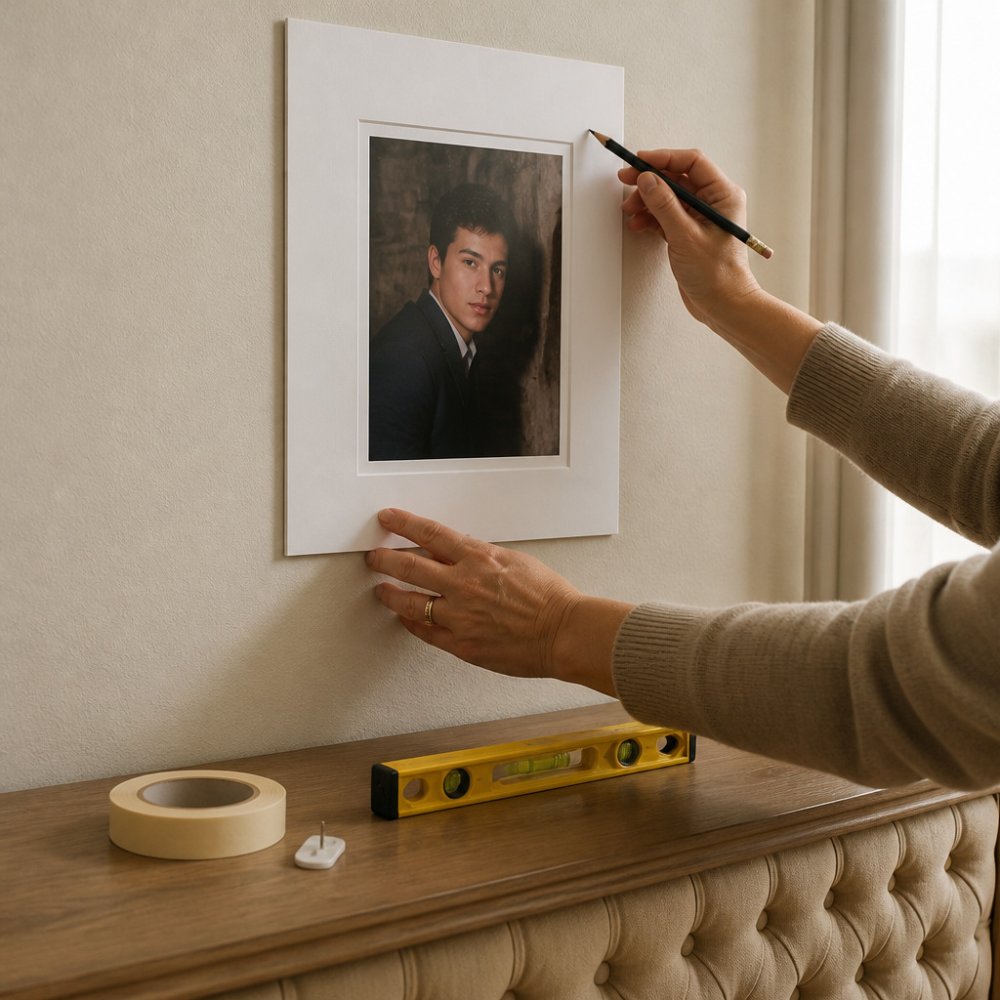
- Measure the mat's exact size, including the border
- Mark the center point on the wall with light pencil
- Attach two hanging points to the back of the mat
- Use wall hooks rated for the weight of the mat
- Level the print before you let go
Attach the hanging points to the mat board, not the print paper. Use a gentle adhesive or acid-free tabs, so nothing touches the image. Check the level before you release the print.
Step back after each adjustment and check the spacing.
Display Matted Photos Without Frames in the Right Room
Room choice shapes how long a print lasts. A quiet interior wall protects the image better than a wall facing the window.
Avoid direct sunlight. Keep prints away from south- and west-facing windows where light hits the wall for hours each day. Steer clear of kitchens and bathrooms, where humidity and steam can warp the mat. Maintaining a stable environment remains the most effective way to preserve the integrity of your collection when displaying art prints without the protective barrier of a frame.
A hallway, bedroom, or living room wall away from heat sources works well. Choose a spot where you will see the portrait often, since regular viewing reminds the family to check its condition.
- Hang prints away from direct sunlight
- Keep them out of steamy kitchens and bathrooms
- Choose walls away from heating vents and fireplaces
- Pick a spot you pass daily so you notice changes
Control Light, Humidity and Handling to Limit Fading
Light, humidity, and handling cause most of the damage to unglazed portraits. You control all three.
Limit light exposure. Use indirect lighting, close blinds during the brightest hours, and consider UV-filtering window film. Keep the room at a steady temperature and moderate humidity.
Handle the mat by its edges. Wash your hands before touching the print, or wear clean cotton gloves for longer handling. Never slide a print across a surface.
Plan a periodic check. Once or twice a year, look at the print for dust, discoloration, or lifting edges.
The main threats to an unglazed portrait are light, humidity and handling, and each one has a simple control.
| Threat | Control | Note |
|---|---|---|
| Direct sunlight | Use indirect lighting and close blinds | Brightest hours cause the most fading |
| Light exposure | UV-filtering window film | Limits slow fading over time |
| Humidity and temperature | Keep room steady and moderately humid | Steady conditions prevent warping |
| Handling | Hold the mat by its edges | Wash hands or wear clean cotton gloves |
| Sliding prints | Never slide a print across a surface | Avoids creasing and surface wear |
| Routine check | Inspect once or twice a year | Look for dust, discoloration, lifting edges |
Protecting Photographs From Dust and Fading Over Time
Dust and fading build up slowly, so small habits make the biggest difference. Keep the print clean and check it regularly.
To remove dust, use a soft, dry brush or a clean, dry microfiber cloth. Brush gently from the center outward. Never use cleaning sprays, water, or household products on the print or the mat.
Rotate prints if they hang in a spot that gets some light. Even small shifts can even out exposure over time.
Keep a record of where each portrait hangs and when it was installed. This helps you spot changes and decide when to move or replace a print.
- Dust with a soft, dry brush or microfiber cloth
- Avoid sprays, water, and household cleaners
- Rotate prints when light exposure is uneven
- Note the hang date and location for each portrait
Common Mistakes That Damage Unframed Portraits
Most damage comes from a few avoidable errors. Watch for these.
- Hanging in direct sun. Even a few hours of daily sun can fade colors noticeably.
- Using cheap mat board. Standard board can stain the print edges and change color over time.
- Pressing tape onto the print. Regular tape leaves residue and can lift the paper.
- Touching the image surface. Fingerprints and oils mark glossy prints quickly.
- Hanging near heat or moisture. Warm, damp air warps the mat and can cause mold.
Avoid these mistakes and the portrait will look as good in ten years as it does on the day you hang it.
When a Frame or Protective Cover Is the Better Choice
Unframed display is not right for every room or family. A frame with glazing or a protective cover offers more protection for prints in high-traffic or high-risk spots.
Choose a frame if the wall gets direct sun, if children or pets often reach the wall, or if the room is humid. A frame also suits a formal space where you want a finished look.
Unframed display works best in a calm, dry room away from the sun. Weigh the look you want against the protection the print needs.
Schedule Your Free In-Home Consultation
Choosing the right materials, room, and display method starts with knowing your senior. At Swartz Portraits, Master Photographer Ty Swartz works with each family to plan a fine art portrait that suits the home it will hang in. Heirloom print collections are handcrafted in Italy by GraphiStudio.
Swartz Portraits accepts 100 seniors per year, with no more than 8 from any single high school. Schedule your free in-home consultation.
Frequently Asked Questions
Can you display a matted portrait without glass?
Yes. A matted portrait can hang without glass when the print is archival, the mat is acid-free and the piece sits in a controlled room away from direct sun. Glass offers the most protection from dust and handling, so without it you should accept more frequent cleaning and more careful placement. Many framing professionals still recommend glazing for valuable prints, and a Master Photographer can help you decide which approach suits your portrait and your home.
Will a matted portrait fade if it is displayed without glass?
Light is the main cause of fading, not the absence of glass alone. Keep an unframed matted portrait out of direct sunlight and away from strong window light, and rotate its position if the room is bright. Indoor light at a moderate level causes far slower change than a sunny window. Avoid hanging the piece above a heat source or in a bathroom where humidity rises. These steps protect the print whether or not glass is present.
How do you keep a matted portrait from getting dusty without glass?
Dust settles on the mat and the print surface when nothing covers them. Dust gently every few weeks with a soft, dry brush or a clean microfiber cloth, always moving in one direction. Hang the portrait in a room that is cleaned regularly and keep it away from fireplaces, vents and high-traffic doorways where particles collect.
Where should you hang a portrait that has no glass?
Choose a wall in a room with steady temperature and moderate humidity, such as a hallway, a dining room or a main living area away from exterior walls. Avoid kitchens and bathrooms, where moisture and cooking residue settle on unprotected surfaces. Keep the portrait at eye level, out of direct sun, and well clear of radiators and air vents.