 How-to
How to Choose Outfits for High School Senior Portraits
Last Updated: November 14, 2026
Quick Summary
To learn how to choose outfits for high school senior portraits, start with one rule: the best outfit keeps a viewer's eyes on your face. Choose solid mid-tone colors, simple necklines, and well-fitting clothes, and let one strong piece lead each outfit. Try every look on a week early and check it in daylight.
- Pure white and pure black are the two most overrated color choices for senior pictures.
- Warm undertones suit rust, mustard, olive, and cream; cool undertones suit navy, emerald, and plum.
- A green, leafy setting pairs best with warm tones, cream, rust, and mustard.
- Plan three outfits as one deep anchor color, one light neutral, and one warm accent.
- Sessions run up to five hours with unlimited outfit changes and multiple locations.
Table of Contents
- Start With the Face, Not the Wardrobe
- Best Colors to Wear for Senior Pictures
- Senior Portrait Outfit Ideas That Hold Up on Camera
- Senior Portrait Outfits for Guys
- What to Wear for Senior Pictures in Winter
- Build the Session Around Multiple Outfits
- Fit, Comfort, and the Details That Disappear on Camera
- The Session-Day Packing Checklist
- Schedule Your Free In-Home Consultation
- Frequently Asked Questions
Start With the Face, Not the Wardrobe
Knowing how to choose outfits for high school senior portraits starts with one rule: the best outfit is the one that keeps a viewer's eyes on your face. That is the whole test. Clothing either supports the face or competes with it, and most wardrobe mistakes come from forgetting that simple rule.
Every session starts with that idea. Not with a color wheel, not with a shopping list. With the face.
A list of "approved" colors alone is rarely enough. But a color that flatters one senior can wash out another. Skin tone, hair color, and the setting all change the answer.
So learn the principle first, then apply it to your own closet.
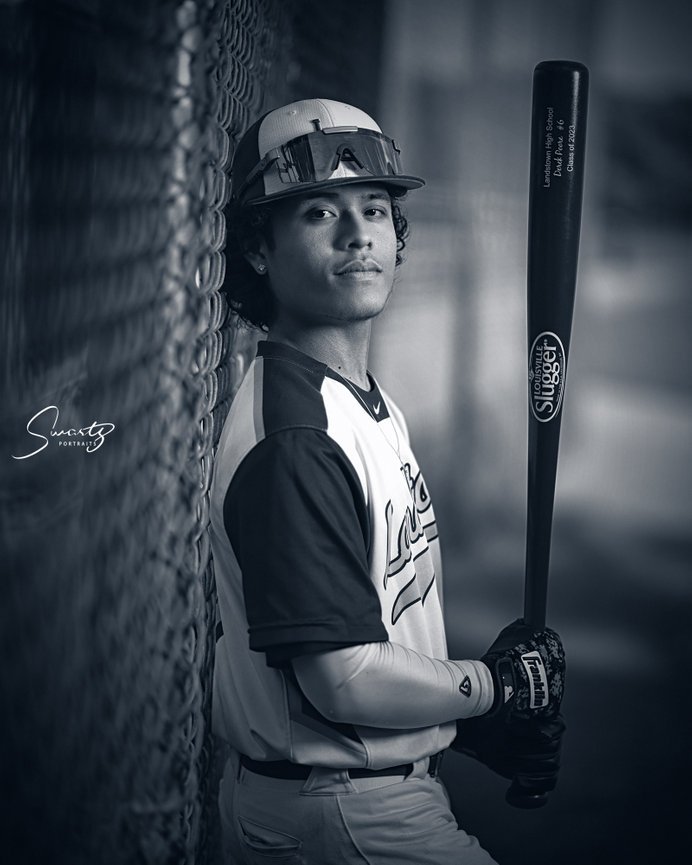
A few starting points that hold up for almost everyone:
- Solid colors read as calm and let the face lead
- Simple necklines frame the jaw and eyes
- Well-fitting clothes look better than expensive ones
- One strong piece per outfit beats three competing ones
For a deeper starting point on looks and preparation, our free senior style guide covers outfits, looks, and how to get ready before planning begins.
Best Colors to Wear for Senior Pictures
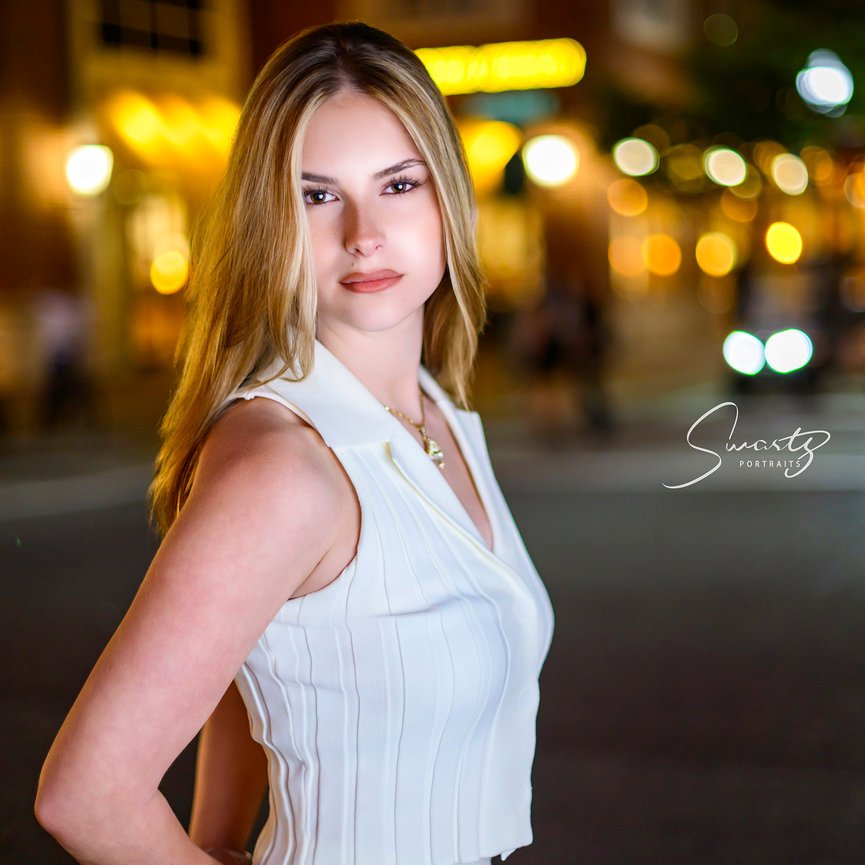
The best colors to wear for senior pictures are solid, mid-tone shades that sit close to your natural coloring. Deep blues, forest greens, burgundy, and warm earth tones photograph well on most skin tones. Pure white and pure black are the two most overrated choices.
Why? White can blow out under bright light and lose all detail. Black can swallow texture and leave you looking like a silhouette. Both can work, but neither is the safe default people assume.
A better approach is to think in terms of contrast. If your skin is fair, deeper colors add depth. If your skin is deep, lighter mid-tones and jewel tones can lift the frame. If you are unsure, hold fabric up to your face in daylight and watch what happens to your eyes.
Read Your Skin Tone Before You Shop
A rule of "wear solid colors" is not enough, because the same burgundy that makes one senior glow can make another look tired. Skin tone has two parts that matter on camera: undertone and depth.
Undertone is the quiet cast beneath the surface. Warm undertones lean golden or peachy and tend to sit well with rust, mustard, olive, cream, and warm brown. Cool undertones lean pink or bluish and tend to sit well with navy, emerald, plum, soft gray, and true red. Neutral undertones can wear most of the middle of the spectrum.
Depth is how light or deep the skin reads. Fair skin gains dimension from deeper, saturated colors because the contrast keeps the face from washing out. Deep skin gains lift from lighter mid-tones and jewel tones because they separate the face from dark hair and shadow.
A simple test at home: stand at a window in daylight, no makeup, and hold three shirts up in turn, one warm, one cool, one neutral. The right one makes your eyes look awake and evens out the skin under your eyes. The wrong one makes you look slightly gray or sallow. Trust the mirror over the color wheel.
Coordinate With the Background, Not Just the Mirror
Portrait clothing should answer to the place you are standing in. A palette that sings at Mercer Botanic Gardens can look flat against a brick wall in Old Town Spring.
- Green, leafy settings: warm tones, cream, rust, mustard
- Stone and brick: cool blues, soft gray, deep green
- Water and sky: white, sand, soft coral, denim
- Indoor and studio: jewel tones and rich neutrals
The reason is contrast. A green background already fills the frame with one hue, so a warm outfit separates the senior from the foliage. A stone or brick wall is neutral and textured, so a cool, clean color reads as deliberate rather than camouflaged. Water and sky are bright and cool, which is why sand, soft coral, and denim hold up there while dark navy can go heavy.
Plan Colors Across the Whole Session
When you bring three outfits, the colors have to work as a set, not just one at a time. A common pattern that photographs well is one deep anchor color, one light neutral, and one warm accent. That gives the final collection range without a jarring jump between frames.
If a parent or sibling will step into a few frames through the Sibling Bonus, keep their clothing in the same family as the senior's anchor color. Matching exactly looks staged. Sharing a palette looks intentional.
Watch out: a color that looks bold and rich on a hanger can turn muddy under late-afternoon light, so try each outfit on outdoors at the time of day you will shoot.
Our complete outfit guide goes deeper on color choices and what actually photographs well.
Senior Portrait Outfit Ideas That Hold Up on Camera
Senior portrait outfit ideas that hold up on camera share one trait: they photograph clean. That means solid colors, simple lines, and fabric with enough weight to hold its shape.
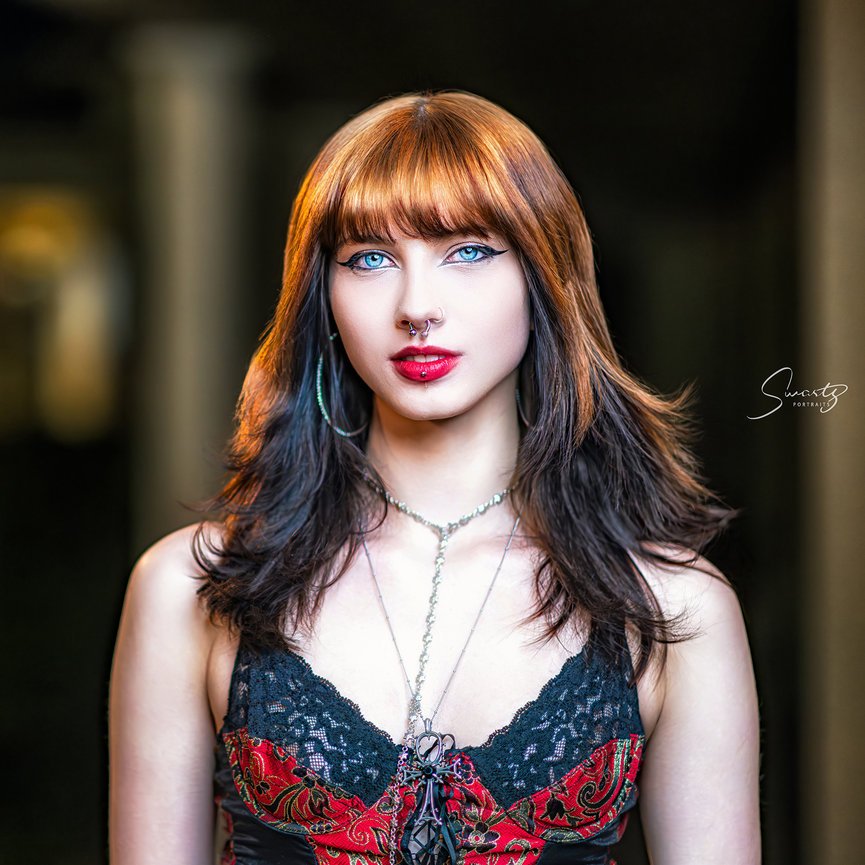
Three outfit directions that rarely miss:
- The timeless look. Dark jeans, a solid-colored top, simple jewelry. It will look right in twenty years.
- The dressy outfit. A dress or jumpsuit in one strong color, with minimal pattern.
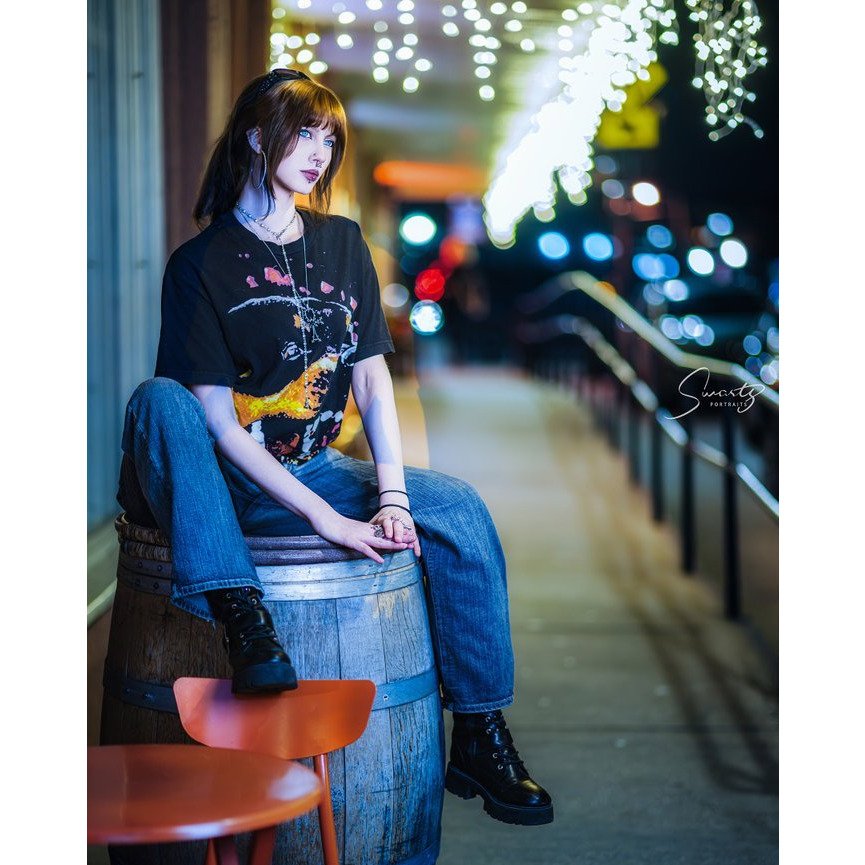
- The personal piece. A varsity jacket, a uniform, an activity shirt, or something that means something to you.
That third one matters more than most guides admit. A senior portrait should look like the person in it. If your whole life is theater or robotics or the marching band, one frame that shows it is worth more than five generic looks.
Avoid busy patterns, stripes, prints, bold graphics, and large logos. They pull the eye away from the face and date fast.
Senior Portrait Outfits for Guys
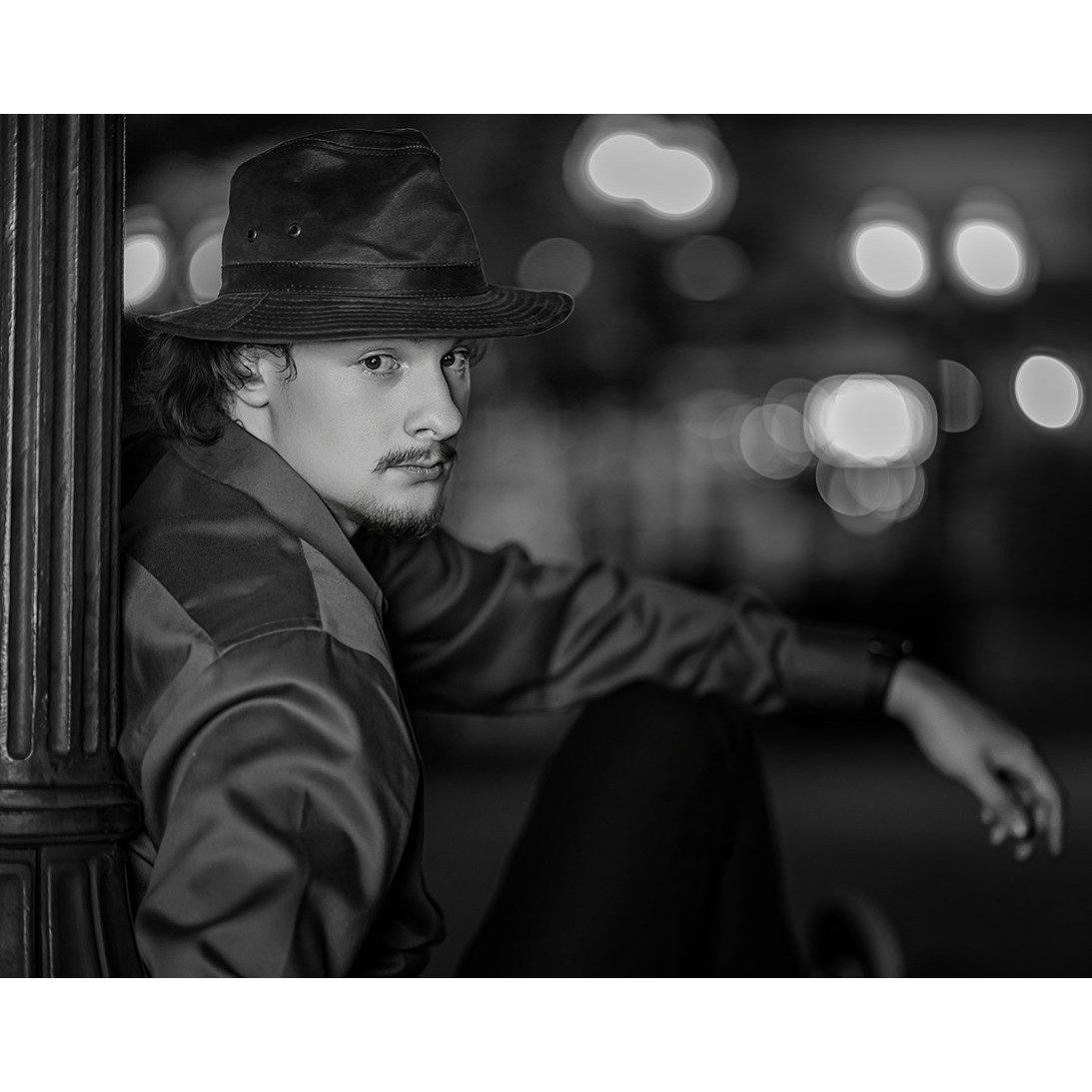
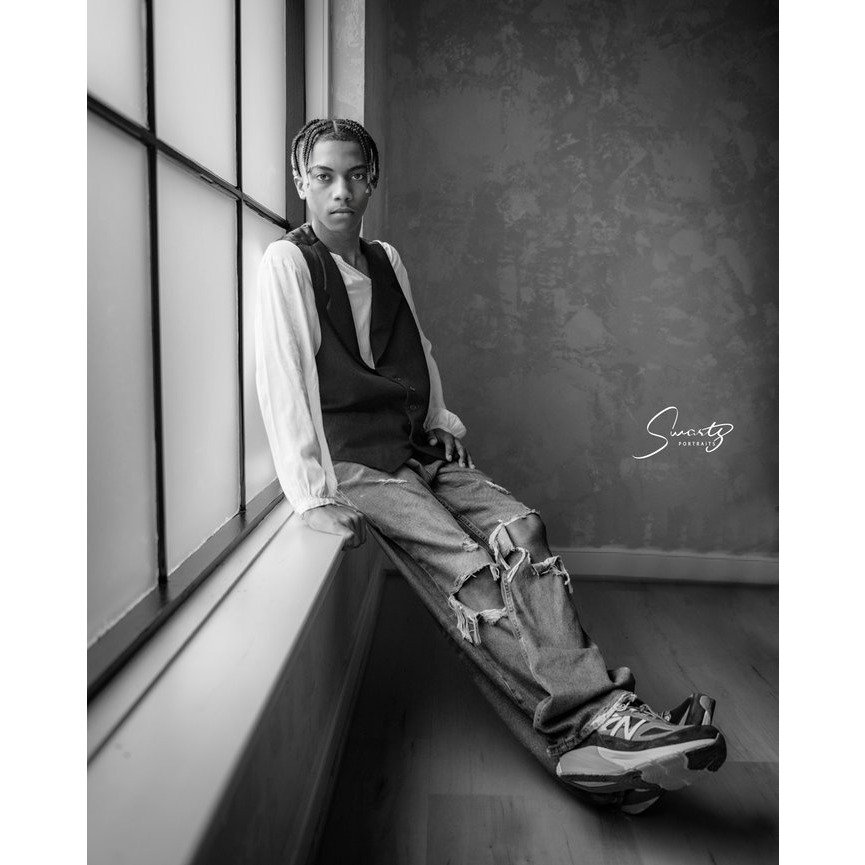
Senior portrait outfits for guys come down to fit and finish. A well-fitted solid shirt and dark jeans will outshoot an expensive suit that hangs wrong every time.
Start with the shoulders. The seam should sit at the edge of the shoulder, not past it. Then check the sleeve and the waist. A tailor can fix almost anything for a modest cost, and it shows on camera.
What works:
- A solid dress shirt, sleeves rolled to the forearm
- A simple crew or henley in a mid-tone color
- Dark, well-fitting jeans with no distressing
- A blazer over a plain tee for a dressy-casual mix
- Clean, simple shoes that match the outfit's formality
What to skip: loud graphic tees, oversized fits, athletic logos, and anything you would not wear to meet someone important.
Fit by Body Type, Not by Trend
Most advice on how to choose outfits for high school senior portraits assumes one body and one silhouette. Real seniors come in every shape, and the goal is the same for all of them: clean lines that keep the eye on the face.
- Broad shoulders: a structured blazer balances the frame, but skip padding that adds bulk at the seam.
- Slim build: a crew neck and a slightly textured knit add visual weight without a boxy fit.
- Tall frame: a longer hem and a full sleeve keep the proportions from looking stretched.
- Shorter frame: a shorter jacket hem and a slimmer leg keep the line unbroken.
- Softer midsection: a straight-cut shirt worn untucked over dark jeans reads relaxed and clean.
The principle is the same one that governs the whole session. Clothing either supports the face or competes with it. Fit is how you make it support.
Dress Codes, Uniforms, and Activity Apparel
A senior portrait should look like the person in it, and for many guys that means the clothes they actually live in. School dress codes and uniforms are part of that story.
A uniform shirt or blazer, worn well and pressed, is a legitimate portrait outfit. So is a letter jacket, a team warmup, a band or theater shirt, or the instrument or tool that belongs to a hobby. One frame that shows what a senior actually does is worth more than five generic looks.
A few practical rules keep these pieces from looking like an afterthought:
- Press or steam the item the night before, because wrinkles read clearly on camera
- Wear it with a clean, simple bottom so the personal piece stays the focus
- Keep logos and lettering to what is genuinely part of the item, not added graphics
- Bring a plain backup top in case the personal piece reads busy in bright light
Gender Expression and Personal Style
Not every senior wants the standard guy list, and the guide should say so. The test is not a gender rule. The test is whether the outfit keeps attention on the face and looks like the person wearing it.
A senior who prefers a tailored blazer, a senior who prefers a soft knit, and a senior who prefers a clean tee and dark jeans are all making the same good decision: simple lines, solid color, and a fit that sits right at the shoulder. Build the outfit around who the senior is, then apply the same fit and color principles from the rest of this guide.
Watch out: a brand-new shirt worn for the first time on session day can gap at the buttons or pull at the shoulder, so break it in a week early and check it in daylight.
A tailor can fix almost anything for a modest cost, and it shows on camera.
What to Wear for Senior Pictures in Winter
What to wear for senior pictures in winter is a layering question, not a warmth question. The goal is to stay comfortable while keeping the outfit from swallowing your shape.
Layers photograph beautifully when they are intentional. A coat over a solid top, a scarf in one color, boots that match the tone of the outfit. All of it adds texture and depth.
A few winter rules we give our seniors:
- Choose a coat that fits at the shoulder, not one you swim in
- Keep scarves to one color or one subtle pattern
- Wear boots you can walk in across grass and gravel
- Bring hand warmers, not gloves, so your hands stay free
- Plan the outdoor portion first, while light and warmth are best
Watch out: a heavy puffer coat hides the whole outfit. If the day is cold, shoot the coat shots first, then shed the outer layer for the frames that matter most.
Build the Session Around Multiple Outfits
Multiple outfits are the single biggest advantage of a longer session. Variety in wardrobe gives you variety in the final collection, and it lets one session tell more of the story.
Sessions run up to five hours with unlimited outfit changes and multiple locations, so a senior can move from a dressy look to a casual look by the water without rushing either one.
How we would plan three outfits:
| Outfit | Purpose | Best Setting | Time of Day |
|---|---|---|---|
| Dressy | The heirloom frame | Stone or architecture | Late afternoon |
| Casual | The real-you frame | Park or water | Golden hour |
| Personal | The story frame | Anywhere meaningful | Flexible |
The session page explains how we design a shoot around your locations, your outfits, and the people and pets you want in a few frames.
Fit, Comfort, and the Details That Disappear on Camera
Fit and comfort decide whether an outfit survives a long session. A stiff collar or a waistband that digs will show in your shoulders long before it shows in the fabric.
The camera is unforgiving about a few things and generous about others. Wrinkles, gaping buttons, and visible bra straps all read clearly. Subtle texture, simple jewelry, and clean lines read as polish.
- Try every outfit on a week before, not the morning of
- Sit, stand, and raise your arms in each look
- Check how the fabric behaves in bright light
- Bring a backup top in case something reads wrong
- Keep jewelry simple so it frames rather than distracts
A common mistake is buying something new and never wearing it before the session. Break it in first.
The Session-Day Packing Checklist
A packing checklist removes the small panics that ruin a session morning. Pack the night before, and pack for the whole day, not just the first outfit.
- Every outfit, on hangers, in order of shooting
- Shoes for each look, broken in
- Backup top and backup jewelry
- Lint roller and a small sewing kit
- Water and a snack
- Hair tools and touch-up makeup
- Any personal item you want in a frame
- A written list of your locations and timing
Our preparation guide walks through what to bring and how to get ready the night before.
Schedule Your Free In-Home Consultation
The right outfit is easier to find with a second set of trained eyes. We photograph 100 seniors a year and no more than 8 from any single high school.
Our complimentary 60-minute in-home consultation is where wardrobe planning can begin. What to look for in a luxury photography consultation tells you what to expect when you book.
You get a Master Photographer with more than 40 years of craft, up to five hours of session time, unlimited outfit changes, and museum-quality heirloom prints and albums handcrafted in Italy. Proofs are revealed in person 7 to 10 days after the session.
Schedule your free in-home consultation and start with the face, then build the wardrobe around it.
The hardest part of senior portraits is not the camera. It is the hundred small decisions about what to wear. Swartz Portraits removes that pressure with a complimentary in-home consultation, a session built around your own outfits and locations, and a private reveal where the final collection comes together. With 100 seniors a year and no more than 8 per high school, the calendar fills honestly.
Frequently Asked Questions
What is the 3-3-3 rule for outfits?
The 3-3-3 rule is a simple wardrobe planning framework: bring three outfits, aim for three distinct looks (dressy, casual, and something in between), and limit each outfit to three main pieces or colors. It keeps you from overpacking and forces variety. For senior portrait outfits, it works best when each look serves a different setting or mood, so the final gallery feels like a full story rather than one long variation of the same idea.
How many outfits should I bring to senior portraits?
Plan on three to five outfits for a session that runs several hours. Swartz Portraits allows unlimited outfit changes across up to five hours and multiple locations, so you can bring more than you wear and decide on site. Pack each outfit complete with shoes, layers, and accessories so nothing is missing when the light is right. A parent or friend can help manage the changes and keep pieces organized between locations.
What should guys wear for senior portraits?
Senior portrait outfits for guys work best when the fit is right and the palette is simple. Start with well-fitting jeans or chinos and a solid-colored button-down or knit polo. Add a jacket or overshirt for a dressier look. Avoid large logos, bold graphics, and busy patterns that pull attention from the face. Bring proper shoes, not just sneakers, and keep jewelry minimal. Layers give you options to change the look without a full outfit swap.
What is the best color to wear for senior pictures?
There is no single best color, but the safest choices are solid mid-tone and jewel-tone shades that contrast with your skin tone and the setting. Deep blues, greens, burgundy, and warm earth tones photograph well in most lighting. Avoid neon, pure white in bright sun, and colors that match your skin too closely. Test each option in natural light before the session and bring a backup in a color you already know suits you.